Pages

Wednesday, 30 July 2014

Being Orthodox and gay - who cares?


Author Eli Glasman
By Eli Glasman

I was brought up in an Orthodox Jewish family in the suburb of Caulfield, Melbourne. I was religious throughout my childhood and early teens. However, at seventeen I found that the religious life wasn’t for me.


The sect of Judaism I was part of was Lubavitch, who are quite integrated into main stream society, so the change wasn’t too much of a culture shock for me. There were little things – such as not wearing a yamulka for the first time in public, and eating non-kosher. I remember the first few times I didn’t wear a yamulka, I was acutely aware of the air on my naked hair and it made me feel uneasy. And it was a while until I could eat non-kosher without feeling slightly guilty. 

However, everyone around me, including religious friends and family, were accepting and respectful. Even if they may not have agreed with my choices, they were still inclusive and loving.


Eli's debut novel
I really don’t hold any resentment about my upbringing. And I certainly didn’t when I started writing my novel, The Boy’s Own Manual to Being a Jew. I guess, since it’s about a homosexual boy in the orthodox Jewish community, when I spoke to many people about it there was the automatic assumption that I would be bitter and the book would be an attack on the community.
 

Yet, I was very careful as I wrote my book. I ensured that I took a measured approach, that I researched and had discussions with people to get a fair perspective on the issue. The intention was that the main character, Yossi, would learn to find a place for himself, as a homosexual, within his faith. So, to show Yossi’s love of Judaism and his community were crucial to showing why he would want to remain religious.
As I was writing, I realised (possibly being a little arrogant), that the book was likely to get published. And, to be honest, I did become slightly afraid about how it would be received.


I guess I was scared I would be ‘attacked’. As soon as I stepped into the public eye, I would be told off regularly and people would bad mouth me on the internet. I knew none of my friends or family would, but there’s something scary about putting yourself out there to complete strangers.

What I’ve learnt though, in my very minor and probably short lived stint in the public eye, is that as long as I’m careful about what I say, I edit what I write based on the input of others and I’m always open to discussion, most reasonable people will not ‘attack’ me. How a person reacts to something they don’t agree has more to do with their personality type than anything. Some are able to acknowledge the differences in others and are genuinely loving and kind, so that no matter what I might think, even if they don’t agree, they will still be lovely people. And those who do attack me are - to put it bluntly - just jerks.
Judaism HomosexualityEveryone in the community, even those I’ve those I’ve never met, have been truly lovely. I’ve had some early readers say that they felt I was too kind on the religious community in my book. There were a wide variety of reactions from the characters when Yossi finally comes out of the closet and they advised me that they felt that some of religious characters whom I’d depicted responding well to Yossi coming out, wouldn’t have responded as well in real life. But, I’d written warm characters who responded to Yossi with love, because that has been my experience of the community.

Perhaps I had romanticized my upbringing. But, as I wrote it, I felt as I was simply being honest.
 

To hear more about Eli’s story don’t miss his sessions at the upcoming Sydney Jewish Writers Festival on Sunday 25 August at Shalom College, UNSW.
Coming out in the 21st century – Who cares? with Prof. Dennis Altman, moderated by Miri Jassy from 2-3pm.

To learn how Eli managed to get his first novel published:
Getting published is really hard, but … with Joanne Felder and Lisa Goldberg, moderated by Kate Steinweg from 4:30pm-5:30pm.
Full program details and ticket information are available at www.sjwf.org.au or call 9381 4160.

Join us on Facebook and Twitter @SJWFestival #SJWF2014

Wednesday, 23 July 2014

HOPE

by Michal Kagan

Last week July 15th 2014 was a day of disappointment and grief, and a day of hope and wonder.  

It was the 17th day of Tammuz.  The longed-for cease-fire that would put an end to this stupidity died before birth leaving behind it explosions and death while, at the same time, traditional Jews fasted and mourned the siege of Jerusalem that eventually led to its fall.  

It was also the 17th day of Ramadan.  In the yeshivah of Maale Gilboa, that overlooks the magnificent Beit She’an section of the Great Rift Valley, Sheikh Ghassan Manasra, his father, his son and his disciples together with rabbis and students prayed together, sang together, learned together, laughed together, cried together, and we broke our fasts together.  

What a magnificent sight to see the rift closing, the walls coming down, the siege ending.  What a fulfillment of God’s Prayer to hear the sounds of the adhan - the Moslem call to prayer - echoing off the walls of the Beit Midrash (house of study).  What a profound experience to daven the standing, silent prayer of Maariv, the evening service, while Moslems are prostrating on the carpets, regularly used by the cohanim, reciting the Maghrib prayer.  And then a sweet date and a glass of water to calm our hunger before the meal.

Sitting there with my sheikh, with my son and daughter-in-law, with my rabbis and their students, and their students’ students, the words that came through me, that form God’s Prayer, began to unwind:

It has started – it can be stopped.
Listen to the Word of the Lord:
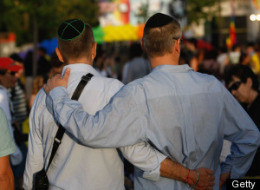
Muslim and Jewish Men in prayer (photos merged so they appear to be back to back)
it can be stopped!

The great war machines of my children,
the offspring of my servant Abraham,
the man of loving-kindness,
you prepare for battle – again.

Widows will be made from the loss of husbands,
orphans will be made by the loss of parents,
cripples will be made by the loss of limbs,
graves will be made by the loss of life.

I say to you: No!

A new gate has opened,
and it is not a gate of war.

Do not turn your backs on this gate,
for it stands open for you.
It is a new Gate:
a Gate of Cooperation,
a Gate of Sharing,
a Gate of Giving,
a Gate of Resting,
a Gate of Peace,
a Gate of Plenty,
a Gate of Purpose,
a Gate of Repair,
a Gate of Healing,
a Gate of Hope.

Michael Kagan transmitter of God’s Prayer (Albion-Andalus, 2014)


Hear Michael Kagan at the Sydney Jewish Writers Festival.
Full program details and ticket information are available at www.sjwf.org.au or call 9381 4160. Join us on Facebook and Twitter @SJWFestival #SJWF2014

Wednesday, 16 July 2014

Books are just the beginning ...

We are very excited to re-launch the Sydney Jewish Writers Festival blog. We have been busy preparing a great program for 2014 and now it’s live!

Books are just the beginning at this year’s SJWF which takes place from 21-24 August and features film, theatre, television, ideas and much more. As many of our fans already know, the Festival is a chance to get up close and personal with talent from overseas and around Australia, engage with big ideas and issues, and add to your personal bookshelf.
This year’s Festival combines writers from multiple genres and types with a film producer, television critic, analysts and actors. They will be speaking about Israel, homosexuality, architecture, Holocaust memorialisation, Jewish cooking, spirituality, publishing tips and much more over three days of varied programming.

Comedian & author John Safran
The SJWF kicks off on Thursday 21 August with John Safran’s one-man live show, ‘Murder in Mississippi’, at 8.00pm at the Bondi Pavilion Theatre. Safran tells the true story of how he met a white supremacist, befriended his black killer and wrote a book. His show will include excerpts from his bestselling book of the same name and share tales of his unique escapades in the Deep South. We are very excited to be co-presenting the show with Network.

The festival continues on Saturday 23 August with a fascinating and provocative evening which will delve into different aspects of Israel.  ‘Secrets and Lies’ features Dr Yoaz Hendel, an expert on Israel-Iran relations, and Rafael Epstein, the author of Prisoner X about Australian Ben Zygier who died in an Israeli prison. This will be followed by one-woman show, ‘Four Faces of Israel’, by Israeli performer Helen Gottstein. Both entertaining and confronting, the four characters share their views on the nature of the state, Middle East history, modern Jewish identity and the complex challenges Israel faces.  (Warning: remember it’s just a show!) Some of the material is quite confronting but sit tight because the show is very thought-provoking and funny.

The program on Sunday 24 August is packed with a range of stimulating sessions including The New Yorker television critic Emily Nussbaum, Oscar-winning film producer Emile Sherman, best-selling author Alan Gold and prominent journalist David Leser.

The Monday Morning Cooking Club
Aspiring writers should be sure not to miss, ‘Getting published is really hard, but…’ This session will take a realistic look at the hurdles to becoming a published author and will include debut Melbourne author Eli Glasman, veteran writer Joanne Fedler who has just completed her eighth book, and Lisa Goldberg from the Monday Morning Cooking Club.

The Monday Morning Cooking Club will also be wrapping up the SJWF with a session not to be missed from 7.00–8.00pm on Sunday called ‘Taste the stories (literally)’. They will talk about the inspirational stories and recipes behind their second cookbook, The Feast Goes On, while the audience samples some of their favourite creations.

It’s going to be a fantastic Festival and we can’t wait! Until then, stay tuned to this blog because we’ll be featuring posts by some of our featured authors, which will be sure to intrigue and entice you to attend their sessions on the day!


Full program details and ticket information are available at www.sjwf.org.au or call 9381 4160. Join us on Facebook and Twitter @SJWFestival #SJWF2014
Monday, 2 September 2013

Thanks for coming!

We weren’t sure what to expect when we decided to hold a Day at the Sydney Jewish Writers’ Festival this year.  Traditionally the SJWF has been a biennial event but following the success of the 2012 festival, we decided to hold a smaller-scale event this year. The response was anything but small-scale!

Feedback from the nearly 400 people that attended either Thursday’s launch with acclaimed French author Laurent Binet or Sunday’s main program has been overwhelmingly positive.  People enjoyed the varied sessions and the excellent presenters.

In particular, visiting Israeli professor Michael Bar-Zohar’s sessions on terrorism and Israeli spy agency, the Mossad, met with rave reviews.  It was standing room only as he told tales of the Ethiopian airlift, Black September and the murder of the Israeli athletes in Munich, and Israel’s efforts to slow Iran’s nuclear program.
Prof Michael Bar-Zohar discusses the Mossad with Michaela Kalowski. Photo: David Sokol 
People also flocked to hear visiting Israeli journalist Boaz Bismuth and Middle East analyst Lydia Khalil talk about the so-called Arab Spring.  They discussed the risks involved in an attack on Syria, the challenges of translating change in civil society to political success, and the potential role for the international community.
Boaz Bismuth and Lydia Khalil discuss the Arab Spring. Photo: David Sokol
Other stand-out speakers included social commentator Hugh Mackay who shared his research and wisdom about what makes a good life, intermingled with Jewish ideas raised by Rabbi Michoel Gourarie who interviewed him. Andrea Goldsmith discussed the role of memory and monuments in our lives. Iranian Jew Kooshyar Karimi revealed the heavy price he paid for acting against the Iranian government. Academics David Bird and Christopher Waters illuminated a relatively unknown but fascinating part of Australian history discussing pro-Nazi sympathisers in Australia and the policy of appeasement led by PM Menzies. Bryan Gaensler wowed audiences with the origins of the universe.

Everyone enjoyed the diverse program and engaging speakers as well as the opportunity to have their books signed by the authors at the Festival bookshop. A numbers of books even sold out.
Hugh Mackay autographs his book after his session, 'What makes a life worth living?'

Clearly the great Jewish literary talent out there is matched by the desire of the community to engage with Jewish writing. We can’t wait for more excellent programming in 2014. In the meantime, stay connected with us via our Facebook page. 

As the Jewish New Year approaches we want to wish you and yours, Shana Tova.

Friday, 30 August 2013

Laurent Binet charms opening night audience

Laurent Binet launched the 2013 Sydney Jewish Writers’ Festival last night before a packed audience. The critically acclaimed French author spoke with Dr Avril Alba about his first novel, HHhH, which was awarded the Prix Goncourt du premier roman 2010.


HHhH is an acronym for Himmlers Hirn heisst Heydrich or ‘Himmler's brain is called Heydrich’ and refers to Reinhard Heydrich: Himmler’s right-hand man, head of the Gestapo, an architect of the Holocaust – and the subject of the book.

The novel is not a straight history but a postmodern literary fiction.  Alongside the terrible, riveting story of Heydrich’s Nazi career and the assassination plot against him runs another compelling yet amusing story about the art of writing itself: when you are a novelist writing about real people, how do you resist the temptation to make things up? Binet was determined not to make anything up about Heydrich, but wanted to be exact and avoid mistakes. Yet can an author ever do justice to history?

During the Q & A, a member of the audience asked Binet about his style, which they found confronting because they felt it didn’t fit in a book about so serious a subject as the Holocaust. Binet explained that this writing style helps him connect and play with the audience. And we agree that irrespective of his playful style, Binet deals with the horrific period of history about which he writes with respect, dignity and sensitivity.

Watch this short video to get an idea of his playful style.

Binet told the enraptured audience that when he began writing about Heydrich, he did not realise how central he was to all the plans of the Third Reich. His extensive research contributed to the 10 years it took to write the book. Although Heydrich’s pivotal role in all aspects of the Nazi regime from Kristallnacht to the Final Solution is lesser known than Eichmann or Himmler, Binet argues that Heydrich was a zealous Nazi and not merely following orders, disputing Hannah Arendt’s theory of the ‘banality of evil’.

Today Binet is working on a second work which more playfully examines the intersection between fiction and history. We, along with his many fans, can’t wait to read it!

Binet ended the night signing copies of his book at the Festival bookshop, run by Lindfield Bookshop, for the audience who were entranced by his French accent and more.


Copies of all the books by the SJWF authors are on sale on Sunday 1 September. Tickets for single sessions or a day pass can be bought at the door. We can’t wait to see you! www.sjwf.org.au

Photos courtesy of David Sokol. 

Tuesday, 27 August 2013

Jewish Wisdom and The Good Life

Our guest blogger this week, Dr Hilton Immerman OAM, is CEO of The Shalom Institute, the organisation behind the Sydney Jewish Writers’ Festival. He reflects on Hugh Mackay’s latest book, The Good Life, and its strong resonance with Jewish principles. We’ll be exploring this further in Hugh Mackay’s session, in conversation with Rabbi Michoel Gourarie, on ‘What makes a life worth living? at 6.00-7.00pm on Sunday 1 September.

Hugh Mackay

Social commentator Hugh Mackay is an important voice in Australian society. It is not just how prolific he is (with 14 books to his name, nine in the field of social psychology and ethics and five novels) but his ability to illuminate our lives and the human condition. In The Good Life, Mackay asks and answers the ultimate question: What makes a life worth living?

His conclusion, drawn from his research, is provocative and passionately argued. A good life is not measured by security, wealth, status, achievement or levels of happiness.

Status and wealth are not the key to happiness, argues Mackay.

Mackay says,

…the more you examine our Utopian fantasies and our energetic attempts to turn them into reality, the more you wonder if the very things we’re so desperate to acquire as symbols of this imagined good life may be insulating us from deeper and more enduring satisfactions, fuelling our dreams while limiting our vision, encouraging us to settle for the most trivial and fleeting meanings of ‘good’.

In fact, a good life is determined by our capacity for selflessness and our willingness to connect with those around us in a meaningful and useful way.

Source: www.msdietforwomen.com

Reading Mackay’s findings, I was reminded again and again of Jewish wisdom which addresses these same issues. Developed thousands of years ago, these ideas jump from the pages of ancient Jewish texts but, as Mackay’s research confirms, remains as timeless and universal as ever.

 There is:
  • The obligation to engage in Tikkun Olam – to help heal/repair/mend the world.
  • The precept from Pirke Avot (2:16), Ethics of the Fathers: “You are not required to finish the work.  Neither are you free to desist therefrom.”
  • Also from Pirke Avot (2:12): “Let your friend’s property be as precious to you as your own… and let all your deeds be done in the name of Heaven.”
  • And Pirke Avot ( 4:1) again: “Who is wise? The one who learns from all people… Who is mighty?  The one who subdues the evil inclination…  Who is rich?  The one who rejoices in his portion….  Who is honoured? The one who honours other human beings….” 
  • The great sage Hillel who said, “That which is hateful unto you do not do to your neighbour. This is the whole of the Torah, The rest is commentary. Go forth and study.” As we well know, this became the basis of ‘The Golden Rule’. 
  • Again from Hillel, “If I am not for myself, who will be for me?  And if I am only for myself, what am I?  And if not now, when?”

We should put all the trappings and embellishments of our material lives into perspective because the bottom line, as Mackay concludes, is:

…that insistent message, echoing through the philosophical traditions of East and West: treat other people the way you’d like to be treated. The basic message never alters, whether your moral heritage is Socratic, Jewish, Christian, Islamic, Buddhist, humanistic or anything in between.


You can view Hugh Mackay’s interview with Jane Hutcheon on ABC TV One Plus One back in May.

And make sure you see him at A Day at the Sydney Jewish Writers’ Festival, in conversation with Rabbi Michoel Gourarie, on ‘What makes a life worth living?' at 6.00-7.00pm on Sunday 1 September.


Tuesday, 20 August 2013

A Chat with Boaz Bismuth

The Australian Jewish News recently published an interview with Israeli journalist BOAZ BISMUTH (republished below in full).  Bismuth is used to being the interviewer, and in his extraordinary career, has interviewed the likes of former Iranian president Mahmoud Ahmadinejad, Syrian president Bashar al-Assad and former Libyan leader Muammar al-Gaddafi. Bismuth, Foreign News Editor and Senior Analyst at Israel Hayom (Israel’s largest daily newspaper), Senior Fellow at the Bar Ilan Center for International Communications and former Israeli Ambassador to Mauritania, will be speaking twice at A Day at the SJWF: on the Arab Spring and Israeli peace talks 


What are some of the countries you have worked in?
In the Arab League there are 22 countries. I have visited, worked and travelled in 18. It started with, I would say, a misunderstanding between me and my newspaper in Tel Aviv. At the time we had a man called Abie Nathan who was supporting peace in many ways and he went to meet [Yasser] Arafat. At the time there was a law in Israel in which Israelis could not meet PLO leaders. The newspaper meant that I was supposed to cover the story by telephone, and I understood that I should fly there. And as I have a foreign passport, I found myself in Tunisia with PLO members covering the meeting, meeting all the Palestinian leaders. And from Tunisia, that beautiful journey in the Arab world started, because Yemen came after, and Jordan, Syria, and of course not only Arabic countries but also Muslim countries like Afghanistan, Iran, all the Gulf countries of course and Kuwait, and of course the Iraqi wars, the first one and the second one.

Do you worry about your safety when in a hostile country?
Sure. Of course there are assignments where I worry more and of course it is obvious if you travel, for example, to Tunisia or Morocco you will be less concerned than if you fly to Libya or to Iraq and especially during the war, or during the Arab Spring when you walk in the street and people shoot around you. But when you believe and you have faith in yourself, and of course in what is above me, then you’re not really alone. In 1996 I got a message from my paper “We’d like you to fly to Lebanon.” At the time we had the military operation with Israel attacking Hezbollah headquarters. Now imagine yourself, an Israeli, finding yourself at the headquarters of Hezbollah, taken there by the driver of the number two of Hezbollah, with Nasrallah nearby. That was fascinating but it can be scary of course because you know that if they find out who you are, then rainy days. On the one hand you’ve got Hezbollah members and on the other hand you’ve got the Israeli helicopters, Apache, just above you, but that’s part of our profession.

Who is the most interesting Arab leader that you’ve interviewed?
Source: Wikipedia
When I started my profession I was always very interested by the Arab world. There was one man that was the head of his state ever since 1969, and his name was [Muammar] Gaddafi. And I found Libya fascinating, a country that you can’t even go inside, no Israeli, no Jew, not any journalists went there. And in 2003 I realised my dream, I saw him in Tunis. One of the biggest scoops I had in my life was when Libya decided to stop its nuclear program, I was the first one, Gaddafi told me that in 2003. It was fascinating to see this man, his way of leading, the way he was surrounded. But he wasn’t the only one, there was also [Bashar] Assad, and of course [former Iranian president Mohammad] Khatami in Iran and of course the biggest story was [Mahmoud] Ahmadinejad in 2010.

What was it like covering the Arab Spring from within?
Very interesting. You see people really who want change, you see brave and courageous [people]. In Tahrir Square you have a street called Mohammed Mahmoud Street that leads to the Ministry of the Interior. I saw motorcycles with two, three people on them, and some of them came back with only one or two, meaning there were youngsters who did not come back or came back wounded. You have seen people who, for the sake of change, are courageous enough to sacrifice their lives. Yet at the same time you had entering the square, secular party people asking to see your passport. And when you said, “Why do you need to see my passport?”, they would say, “In order to be sure that Israelis are not entering the square.” Unfortunately, one thing is very strong in the Arab Street, [that] is still the misunderstanding, hatred, refusal, denial of what I represent, which is Israel.

What impact do you think new Iranian President Hassan Rowhani will have?
Source: Times of Israel
Khatami was all about dialogue between civilisations, this is going to be a new world, a new era in Iran. Yet during him the enrichment of uranium went onward. So we have been in this movie before. Rowhani is a little bit the same thing, Iran with a smile. This is very dangerous for Israel because Iran will continue with this program in nuclear uranium, but instead of doing it like Ahmadinejad – shouting and screaming and denying the Holocaust – he will do it with a big smile and talking about Facebook. Yet, one big change, because I prefer to be optimistic. So I would say that times have changed. Iranians must also adapt to this changing world. This is an end of an era; a new era is coming. I don’t believe in the Iran leadership, yet I have a lot of respect for the past and future of the Iranian people. And they will make the change.

Will there be peace with the Palestinians?
We have to. We will not be able to send them to Australia; they will not be able to send us to New Zealand. The only problem is we have this crazy equation of two emotional peoples in a rather small piece of land, and the religious element – instead of calming down people, it excites us even more. I do believe that the day when our kids forget why their grandparents or fathers fought, that day we shall really have peace. But still I think we always put the targets too high. We should change our aims, we should go a little bit slower in what we’re targeting.


Interviewed by Garenth Narunsky, Australian Jewish News